Investigation
120 d3ad in latest Sudan Cholera outbreak â WHO

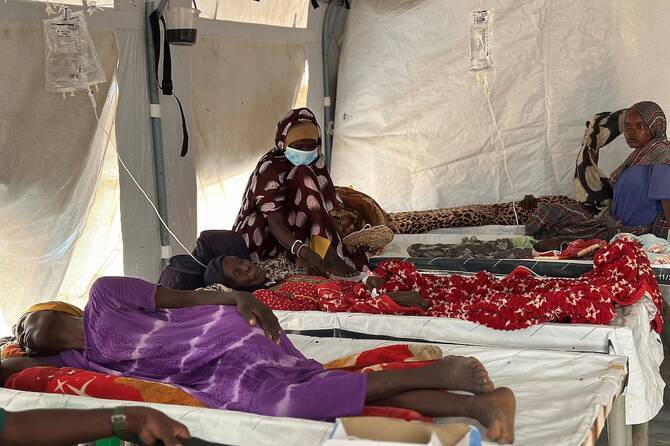

A cholera outbreak in Sudan has killed 120 people, with another 1,102 suspected cases registered since May in isolated war zones, the World Health Organization said Wednesday, July 1.
More than three years of civil war between Sudan’s army and the paramilitary Rapid Support Forces (RSF) have decimated the country’s healthcare system, creating an environment where preventable waterborne diseases can spread unchecked.
This marks Sudan’s third wave of cholera in as many years, beginning just two months after the previous outbreak was officially declared over in March. Between July 2024 and March 2026, over 124,400 people were infected and 3,500 killed during that prior wave, according to formal government figures.
While cholera used to hit the northeast African country in a cyclic manner every three years, near-continuous outbreaks are now occurring due to the conflict, extreme constraints in humanitarian access, and heavily limited medical supplies. The situation is expected to worsen in the coming weeks with the surge of Sudan’s rainy season.
Flooding historically causes cholera cases to balloon as millions of displaced persons lack access to clean water, while the rains simultaneously ruin roads and further impede humanitarian rescue operations.
The Sudanese government officially declared the latest outbreak in the flashpoint West Kordofan state, which acts as the dividing line between army and paramilitary zones of control. Constant, deadly drone strikes launched by both factions have made commercial and aid access to the Kordofan region increasingly dangerous, bringing hundreds of thousands of residents to the brink of starvation. The WHO noted that the outbreak is rapidly spreading, following reports of close to 300 suspected cases and three deaths in neighboring North Kordofan.
The United Nations has already warned that the RSF is preparing to mount a deadly ground assault on the state capital of El-Obeid. Ongoing drone strikes on that city’s power stations are already disrupting access to lifesaving drinking water and electricity, prompting warnings of mass atrocities from UN humanitarian officials.
Three years into the civil war, which aid groups estimate may have killed more than 200,000 people, roughly 40 percent of Sudan’s health facilities are completely non-functional, while the remaining 60 percent are only partially operational.


EXCLUSIVE: ‘We Were Planning To Move To Canada': Widow Of Lagos Sound Engineer Lynched, Set Ablaze Over N100 Speaks After Killers Sentenced To Death

CBN Unleashes Regulatory Hammer: 46 Microfinance Banks Lose Licences Amidst Financial Sector Overhaul

Implement FG deal in Ondo varsities, ASUU urges Aiyedatiwa

"I would have contacted HIV or Hepatitis B if I had stayed" – Nigerian woman says as she reflects on her failed marriage

‘I beg you, let the dogs in’ – Aryna Sabalenka wants Wimbledon to lift puppy ban
‘I beg you, let the dogs in’ – Aryna Sabalenka wants Wimbledon to lift puppy ban

DSS arraigns five over alleged coup plot
- Breaking2 days ago
Forget about body count. Sometimes itâs better to marry a lady who has gone into the world and experienced life than to marry one who hasnât- Nigerian doctor’s advice to men sparks debate online
- Investigation3 days ago
Emerging facts points to his innocence – Harrison Gwamnishu shares update on man brutally beaten after being accused of N2m theft in Enugu
- World2 days ago
Iran launches strikes targeting Bahrain, Kuwait, threatens "complete halt" to talks

 World18 hours ago
Boy, 3, pulled alive from rubble six days after Venezuela earthquake disaster
- Breaking2 days ago
Community leader and woman k!lled in fresh Plateau attacks
- Investigation3 days ago
âTheyâre coming for usâ: Atiku warns of plot to keep ADC off 2027 polls
- Investigation2 days ago
Ex-NFL star Chris Johnson reveals âshockingâ ALS diagnosis
- Investigation3 days ago
Police bust âone-chanceâ gang, arrest seven for various offences in Ogun